


Installation & Repair Services for Booster Pumps: Residential & Commercial Solutions
Resolving Weak Water Pressure – Ensuring Long-term Pressure Stability
Weak water flow and dripping faucets can severely impact the performance of water-using appliances and are common issues in townhouses, multi-story buildings, spas, hair salons, and boarding houses. Installing or repairing a booster pump with the correct technical standards is essential to ensure your water system operates stably, safely, and energy-efficiently.
Dai Phong Group provides comprehensive booster pump installation and repair services. We offer on-site surveys, transparent quotations, and technical execution that meets all residential electrical and plumbing standards.
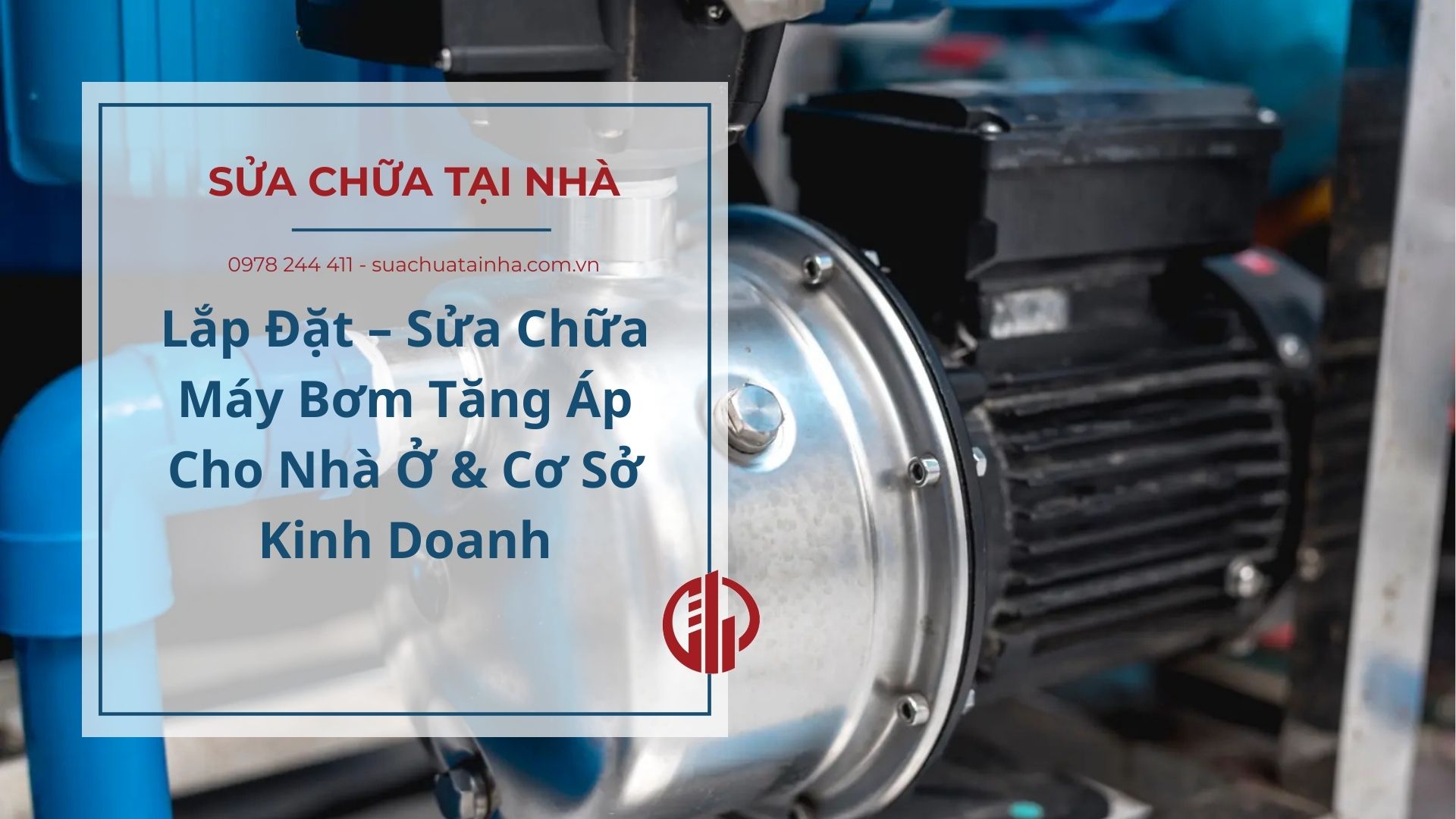
1. When Should You Install or Repair a Booster Pump?
Booster pumps play a vital role in ensuring stable water pressure for residential homes, spas, hair salons, boarding houses, and high-rise buildings. Recognizing the right time to install a new pump or repair an existing one will help prevent disruptions in daily life or business and limit damage to the plumbing system.
1.1. Weak Water Flow and Insufficient Pressure
-
Signs: Faucets drip or flow weakly; water pressure fluctuates; washing machines, water heaters, and hair-washing chairs operate inefficiently.
-
Common Causes: Low inlet water pressure or a multi-story building with long piping runs.
-
👉 Solution: Install a booster pump with the appropriate wattage/capacity.
1.2. Weak Water Flow When Using Multiple Fixtures Simultaneously
-
Signs: Water pressure drops significantly when 2–3 faucets are opened at once; spas and hair salons experience water shortages during peak hours.
-
Common Causes: The system lacks sufficient distribution pressure.
-
👉 Solution: Install an automatic or inverter booster pump to stabilize pressure.
1.3. Existing Booster Pump is Operating Instably
-
Signs: The pump switches on and off constantly (cycling); loud noises or strong vibrations; inconsistent water pressure.
-
Common Causes: Faulty pressure switch, weak or damaged pressure tank, or incorrect technical installation.
-
👉 Solution: Repair, recalibrate, or replace pump components.
1.4. Pump Fails to Start or Fails to Shut Off
-
Signs: The pump does not run even when faucets are open; the pump runs continuously without stopping, risking a motor burnout.
-
Common Causes: Blown capacitor, faulty relay, or damaged pressure switch.
-
👉 Solution: Professional inspection and immediate repair are required to avoid severe damage.
1.5. Renovations, Floor Additions, or Business Expansion
-
Signs: After adding a new floor or renovating a spa/salon, the water pressure becomes weaker than before.
-
Common Causes: The old pump capacity is no longer sufficient for the increased demand.
-
👉 Solution: Upgrade or replace with a booster pump that meets the new capacity requirements.
1.6. Frequent Plumbing System Issues
-
Signs: Leaks or pipe bursts due to unstable pressure; valves and fixtures wear out quickly.
-
Common Causes: The pump is operating at the wrong pressure settings.
-
👉 Solution: Perform a comprehensive system check followed by pump adjustment or repair.
2. Causes of Poor Booster Pump Performance
A poorly functioning booster pump not only leads to weak and flickering water flow but also increases electricity consumption, accelerates equipment wear, and directly impacts daily life or business operations at spas and hair salons. Here are the most common causes that require early inspection:
2.1. Incorrect Pump Capacity Selection
-
Symptoms: The pump runs, but water remains weak; it fails to meet demand when multiple fixtures are used simultaneously.
-
Cause: The wattage/capacity is too small for the number of floors or the number of water-using appliances.
-
👉 Solution: Recalculate flow rate and head pressure, then replace with a correctly sized pump.
2.2. Improper Technical Installation
-
Symptoms: The pump cycles (switches on/off) continuously; water pressure is unstable.
-
Cause: Installed in the wrong water flow direction; failure to install a check valve or debris filter; suction pipes are too small or excessively long.
-
👉 Solution: Re-install according to technical standards and manufacturer guidelines.
2.3. Damaged or Misadjusted Pressure Switch (Relay)
-
Symptoms: The pump does not shut off automatically; it fails to start when a faucet is opened.
-
Cause: Low-quality relay or improper pressure settings.
-
👉 Solution: Replace or recalibrate the pressure switch.
2.4. Leaking or Damaged Pressure Tank
-
Symptoms: Strong vibrations and loud noises; water pressure fluctuates between strong and weak.
-
Cause: The pressure tank has lost air pressure or the internal bladder is torn.
-
👉 Solution: Re-inflate with air or replace the pressure tank.
2.5. Clogged Suction or Discharge Pipes
-
Symptoms: The pump sounds strained (heavy load); water flow rate drops significantly.
-
Cause: Sediment, debris, hair, or sand entering the pipes.
-
👉 Solution: Clean the pipes and install a suction-end filter.
2.6. Unstable Power Supply
-
Symptoms: The pump runs weakly; prone to blown capacitors or overheating motors.
-
Cause: Low or fluctuating voltage; sharing an outlet with high-power appliances.
-
👉 Solution: Use dedicated wiring and stabilize the power source for the pump.
2.7. Aging Components and Long-term Use
-
Symptoms: Excessive noise and vibration; high electricity consumption with low efficiency.
-
Cause: Worn-out bearings, mechanical seals, or capacitors.
-
👉 Solution: Perform maintenance, replace components, or upgrade to a new pump.
3. Booster Pump Service Categories by Dai Phong Group
With years of experience in installing, repairing, and upgrading water systems, Dai Phong Group provides a full range of booster pump services for residential homes, spas, hair salons, boarding houses, and high-rise buildings, ensuring technical precision, efficiency, and durability.

3.1. Consultation for Correct Pump Capacity Selection
-
Survey: On-site assessment of the number of floors and water fixtures.
-
Calculation: Determining the appropriate flow rate, head pressure, and wattage.
-
Selection: Advising on various pump types: mechanical, electronic, or inverter.
-
👉 Benefit: Helps customers avoid purchasing the wrong model and saves costs.
3.2. Comprehensive New Booster Pump Installation
-
Technical Standards: Installation following correct water flow direction and technical protocols.
-
Piping & Accessories: Setting up suction/discharge pipes, check valves, debris filters, and shut-off valves.
-
Electrical Safety: Dedicated wiring for safety and operational stability.
-
Testing: Pressure testing and operational trials before handover.
-
👉 Ideal for: New houses, newly opened spas, renovations, or floor additions.
3.3. Repairing Weak or Intermittent Booster Pumps
-
Fixing: Resolving issues where the pump runs but no water flows.
-
Troubleshooting: Fixing continuous cycling (on/off) or failure to shut off.
-
Noise & Heat: Handling strong vibrations, loud noises, and motor overheating.
-
👉 Benefit: Fast solutions that avoid replacement unless absolutely necessary.
3.4. Replacement of Booster Pump Components
-
Switching: Replacing pressure switches (relays).
-
Electrical & Mechanical: Replacing capacitors, mechanical seals, and bearings.
-
Pressure Tank: Re-inflating or replacing the pressure tank.
-
👉 Quality: Using standardized components with a clear warranty.
3.5. Upgrading to Higher Capacity Booster Pumps
-
Upgrading: Enhancing systems for added floors or expanded spa/salon operations.
-
Replacement: Installing pumps that match the new flow requirements.
-
System Adjustment: Realigning pipes, valves, and pressure settings.
-
👉 Benefit: A long-term solution to avoid overloading and motor burnout.
3.6. Periodic Maintenance & Cleaning
-
Sanitation: Cleaning suction and discharge lines.
-
Monitoring: Checking pressure levels, voltage, and water tightness.
-
Prevention: Early detection of components prone to failure.
-
👉 Benefit: Ensures quiet operation, longevity, and energy savings.
3.7. 24/7 Emergency Incident Handling
-
Urgent Issues: Pump failure, sudden water loss, or continuous running with burnout risk.
-
Business Impact: Addressing weak pressure that affects commercial operations.
-
👉 Support: Rapid response and timely presence to minimize disruptions.
4. Are Booster Pumps Dangerous?
Booster pumps are NOT dangerous if they are installed correctly, used within their rated capacity, and maintained periodically. However, in reality, incidents such as motor burnouts, electrical leaks, or pipe bursts often stem from improper installation, misuse, or incorrect repairs. Below is a detailed analysis to help you understand and prevent these risks.
4.1. Risks of Improper Booster Pump Usage
-
🔴 Risk of Motor Burnout and Short Circuits:
-
Causes: Continuous running without shutting off; weak power supply or undersized wiring; placing the pump in damp, unprotected areas.
-
Consequences: Destroyed motor, electrical fires, and safety hazards for users.
-
-
🔴 Risk of Pipe Bursts and Concealed Leaks:
-
Causes: Excessive pump pressure; failure to install pressure-reducing valves or check valves.
-
Consequences: Bursted in-wall pipes, ceiling seepage, and structural damage.
-
-
🔴 Excessive Vibration and Loud Noise:
-
Causes: Unstable or insecure mounting; damaged or under-inflated pressure tank.
-
Consequences: Disturbance to daily life and reduced pump lifespan.
-
4.2. When is a Booster Pump Completely Safe?
✅ Absolute safety is guaranteed when the following factors are met:
-
Selecting the correct wattage based on the number of floors and fixtures.
-
Installing a full set of check valves, debris filters, and shut-off valves.
-
Having a properly functioning and calibrated pressure switch.
-
Using a stable power supply with a dedicated circuit breaker (CB).
-
Placing the pump in a dry, well-ventilated location.
-
Performing periodic maintenance every 6–12 months.
-
👉 When installed to standard, booster pumps run quietly, save energy, and pose no danger.
4.3. Warning Signs of an Unsafe Booster Pump
⚠️ Inspect immediately if you encounter any of these signs:
-
The pump runs and fails to shut off automatically.
-
The motor feels abnormally hot.
-
Burning smells or strange noises are present.
-
Excessive water pressure causes the piping to vibrate violently.
-
The circuit breaker (CB) trips frequently.
-
👉 Turn off the machine and call a professional immediately to avoid serious incidents.
4.4. Tips for Safe & Long-lasting Booster Pump Usage
-
✔️ Always have the pump installed by a professional unit.
-
✔️ Do not manually adjust the pressure to excessively high levels.
-
✔️ Never let the pump run dry (without water).
-
✔️ Clean the debris filter periodically.
-
✔️ Regularly check the pressure tank and relay/switch.
4.5. Conclusion
-
👉 Booster pumps are not dangerous. Danger only arises when:
-
Technical installation is flawed.
-
The wrong capacity is used.
-
Maintenance and repairs are neglected.
-
-
Therefore, choosing Dai Phong Group for standardized booster pump installation and repair is the safest, most durable, and most cost-effective solution.
5. Technical Standard Process for Booster Pump Installation & Repair
To ensure a booster pump operates stably, durably, and safely regarding both electricity and water-tightness, installation and repairs must strictly adhere to a technical process. We avoid guesswork or “temporary” fixes.

5.1. On-Site Inspection of Water and Electrical Systems
Our technicians will:
-
Check the water source (water tanks or direct city water).
-
Measure inlet and outlet water pressure.
-
Inspect plumbing lines for leaks, clogs, or concealed in-wall issues.
-
Verify the power source (wiring, outlets, and circuit breakers).
-
👉 Goal: To identify the root cause of weak water pressure or unstable pump performance.
5.2. Consultation & Capacity Calculation
Pumps are selected based on technical calculations, not price or intuition. We consider:
-
Number of floors (1–5 floors).
-
Number of fixtures running simultaneously.
-
Total piping distance.
-
Continuous demand (e.g., spas, hair salons).
-
➡️ Avoiding: Small pumps (water remains weak, pump runs constantly) or oversized pumps (wasted energy, excessive noise, pipe damage).
5.3. Inspecting & Resolving Related Plumbing Issues
Before installation or repair, it is mandatory to:
-
Fix any existing water leaks.
-
Clean or unclog the pipes.
-
Install check valves in the correct positions.
-
Check all threaded joints and couplings.
-
👉 Note: If this step is skipped, the pump will not be effective, even if it is a brand-new unit.
5.4. Professional Technical Installation
A standard installation includes:
-
Securing the pump on an anti-vibration base.
-
Placing the pump in a dry, accessible location for maintenance.
-
Connecting pipes according to the correct water flow direction.
-
Installing airtight gaskets to prevent leakage.
-
⚠️ Strictly Prohibited: Hanging the pump without support or placing it in damp, flood-prone areas.
5.5. Safe Dedicated Electrical Wiring
This is a critical but often overlooked step:
-
Installing a dedicated circuit breaker (CB) for the pump.
-
Using wiring with the correct cross-section for the load.
-
Avoiding shared outlets with household appliances.
-
Providing safety grounding (earthing) if required.
-
👉 Benefits: Prevents short circuits/motor burnouts and ensures safe maintenance.
5.6. Test Run & Pressure Calibration
Once installation is complete:
-
Test run each water-using fixture.
-
Verify the automatic start/stop function.
-
Calibrate the pressure switch (relay) appropriately.
-
Check for vibration, noise levels, and motor temperature.
-
➡️ Goal: Ensuring the pump only runs when water is turned on and never runs dry.
5.7. Usage Guidance & Warranty Handover
The technician will:
-
Provide instructions on proper pump usage.
-
Show how to identify warning signs of pump issues.
-
Set a schedule for periodic cleaning and inspections.
-
Hand over clear warranty documentation.
6. How Long Does It Take to Install or Repair a Booster Pump?
The completion time is a top priority for our customers, especially for spas, hair salons, and households that require a continuous water supply. In reality, the duration depends on the pump’s condition, the extent of the damage, and the installation environment. Specifically:
6.1. New Booster Pump Installation Time
⏱ Average: 1 – 2 hours
-
Surveying the installation site.
-
Installing the pump and suction/discharge piping.
-
Installing check valves, debris filters, and shut-off valves.
-
Setting up dedicated wiring and safety circuit breakers (CB).
-
Pressure testing and operational trials.
-
👉 For residential homes or small spas: Usually completed within 1 hour.
-
👉 For large spas with multiple fixtures: 1.5 – 2 hours.
6.2. Booster Pump Repair Time
⏱ Average: 30 minutes – 2 hours
| Pump Condition | Processing Time |
| Adjusting pressure relay | 30 – 45 minutes |
| Replacing capacitor | 30 – 60 minutes |
| Replacing pressure switch | 45 – 60 minutes |
| Fixing continuous running | 60 – 90 minutes |
| Replacing pressure tank | 60 – 120 minutes |
👉 Most incidents are resolved within the day, ensuring minimal disruption.
6.3. Cases Requiring More Time
⏳ 2 – 4 hours (or rescheduled sessions) if:
-
The entire pump unit must be replaced.
-
Piping and installation sites require significant renovation.
-
The pump is located in-wall or in a difficult-to-access area.
-
Spas or residences require a full system capacity upgrade.
6.4. Factors That Shorten Installation Time
-
✔️ Accurate initial survey.
-
✔️ Pre-selecting appropriate components and pump models.
-
✔️ Professional technicians with standardized technical skills.
-
✔️ Existing plumbing and electrical systems that require no structural demolition.
6.5. Time Commitment from Dai Phong Group
-
Arriving promptly when the customer calls.
-
Providing a clear timeline before starting construction.
-
No unnecessary delays or unreasonable time extensions.
-
Handover only when the machine is operating stably and safely.
7. Booster Pump Installation & Repair Price List (Reference)
| Category | Estimated Price (VNĐ) |
| System Survey & Inspection | Free |
| Booster Pump Installation | 500,000 – 1,200,000 |
| Repairing Pump (Failure to Start) | 300,000 – 600,000 |
| Pressure Relay Replacement | 350,000 – 700,000 |
| Dedicated CB & Outlet Installation | 250,000 – 500,000 |
⚠️ Note: Actual prices depend on the pump capacity, installation location, and the current condition of the system.
8. Common Mistakes in DIY Booster Pump Installation
Many households, spas, and hair salons attempt to install booster pumps themselves to save on costs. However, a lack of technical knowledge can lead to even weaker water pressure, premature equipment failure, and safety hazards. Below are the most common mistakes to avoid:
8.1. Incorrect Pump Capacity Selection
-
Mistake: Buying a pump that is either too small or too large for the actual needs.
-
Consequences: Small pumps leave water flow weak; oversized pumps create excessive pressure, leading to pipe bursts and leaks.
-
👉 Solution: Calculate flow rate, number of floors, and number of fixtures accurately before purchasing.
8.2. Incorrect Pump Placement
-
Mistake: Placing the pump higher than the water source or in damp, unprotected areas.
-
Consequences: The pump fails to prime (cannot pull water); high risk of short circuits and motor damage.
-
👉 Solution: Place the pump lower than the water tank in a dry, well-ventilated location.
3. Failure to Install Check Valves and Debris Filters
-
Mistake: Connecting the pump directly to the piping without protection.
-
Consequences: Water flows backward; debris enters the pump, clogging and damaging the impeller.
-
👉 Solution: It is mandatory to install a check valve and a suction-end debris filter.
8.4. Incorrect Inlet/Outlet Orientation
-
Mistake: Ignoring the “IN/OUT” markings on the pump body.
-
Consequences: The pump fails to boost pressure and the impeller wears out quickly.
-
👉 Solution: Double-check the flow direction before securing the machine.
8.5. Neglecting Dedicated Circuit Breakers and Wiring
-
Mistake: Sharing an outlet with other household appliances.
-
Consequences: Risk of overloading, blown capacitors, and electrical fires.
-
👉 Solution: Use a dedicated power source and a safety circuit breaker (CB) for the pump.
8.6. Setting the Pressure Too High
-
Mistake: Manually tightening the pressure relay/switch to force stronger flow.
-
Consequences: The pump runs continuously; causes pipe bursts and concealed in-wall leaks.
-
👉 Solution: Adjust pressure only within the manufacturer’s recommended range.
8.7. Insecure Mounting
-
Mistake: Placing the pump directly on the ground or hanging it without proper support.
-
Consequences: Intense vibration and loud noise; premature bearing failure.
-
👉 Solution: Bolt down the base and use anti-vibration rubber pads.
8.8. Lack of Post-Installation Inspection and Maintenance
-
Mistake: Continuous use immediately after installation without further checks.
-
Consequences: Failure to detect early leaks or pressure errors.
-
👉 Solution: Re-inspect after 1–2 weeks and perform periodic maintenance.
⚠️ Important Conclusion
-
👉 Fact: 80% of premature booster pump failures result from incorrect DIY technical installation.
-
👉 Hiring a professional unit like Dai Phong Group ensures: Technical precision, electrical and water safety, quiet operation, durability, and energy efficiency.
9. FAQ – Frequently Asked Questions
The FAQ section provides quick answers regarding booster pump installation and repairs while enhancing search visibility through Google’s rich snippets.
9.1. Does a single-story house need a booster pump?
-
Answer: Yes, if the water pressure is weak, if multiple appliances (washing machine, water heater) are used simultaneously, or if the city water inlet is unstable.
9.2. Do booster pumps consume a lot of electricity?
-
Answer: Not significantly. The pump only runs when water is turned on. If the correct wattage is selected and technical installation is proper, power consumption remains very low.
9.3. Is it okay if the booster pump runs continuously?
-
Answer: No. Continuous running can lead to motor burnout and capacitor failure. You should inspect the pressure relay or the pressure tank immediately.
9.4. How often should a booster pump be maintained?
-
Answer: Maintenance should be performed every 6–12 months to check pressure levels, voltage, debris filters, and internal components.
9.5. Which type of booster pump is best for spas and hair salons?
-
Answer: Electronic or inverter booster pumps are recommended. They provide stable pressure even when multiple stations are operating at once.
9.6. What causes a booster pump to make loud noises or vibrate strongly?
-
Answer: Common causes include insecure mounting, a faulty pressure tank, worn-out bearings, or air trapped inside the pipes.
9.7. Is a pressure tank necessary for a booster pump?
-
Answer: Yes. A pressure tank helps reduce vibration and noise, limits continuous cycling (on/off), and extends the pump’s lifespan.
9.8. Can I adjust the pump pressure myself?
-
Answer: It is not encouraged. Incorrect pressure settings can lead to pipe bursts or machine damage. This should be handled by a professional.
9.9. When should I replace my booster pump with a new one?
-
Answer: Consider replacement when the pump is 5–7 years old, requires frequent repairs, consumes excessive power, or no longer meets your capacity needs.
9.10. Does installing a pump affect old plumbing?
-
Answer: If installed correctly at the right pressure settings, your pipes remain safe. However, incorrect installation can easily cause leaks or pipe bursts.
9.11. Are booster pumps dangerous?
-
Answer: No, provided they are installed technically, have a dedicated circuit breaker, and receive periodic maintenance.
9.12. Does repairing a pump always mean replacing it?
-
Answer: Not at all. In many cases, simply replacing the relay, capacitor, or pressure tank will restore the pump to normal operation.
9.13. What should I do if the pump fails to start?
-
Answer: Turn off the power, check the circuit breaker and electrical source, then call a technician to inspect the capacitor, relay, and motor.
9.14. How long does installation or repair take?
-
Answer:
-
New Installation: 1–2 hours.
-
Repairs: 30–120 minutes.
-
9.15. Does Dai Phong Group provide a service warranty?
-
Answer: Yes. All booster pump services at Dai Phong Group come with a clear warranty and rapid support in case of any issues.
10. Why Choose Dai Phong Group?
When it comes to booster pump installation and repair, your choice of contractor directly impacts safety, performance, and equipment lifespan. Dai Phong Group is the trusted partner for many clients thanks to our distinct advantages:
10.1. Deep Expertise in Water Systems & Booster Pumps
-
Years of Experience: Specializing in water supply systems and booster pump repairs for:
-
Residential houses, townhouses, and apartments.
-
Spas, hair salons, boarding houses, and high-rise buildings.
-
-
Technical Understanding: We master the specific requirements of water pressure, flow rate, and capacity for every usage model.
10.2. Real-world Surveys – Accurate Consulting
-
Free Survey: Conducting on-site inspections before starting any work.
-
Integrity: Advising on the correct capacity based on actual needs; we never push for a replacement unless it is truly necessary.
-
Effectiveness: Proposing cost-saving solutions that ensure long-term efficiency.
10.3. Technical Precision – Absolute Safety
-
Full Installation Package: Ensuring all essential components are included: Check valves, debris filters, dedicated circuit breakers (CB), and pressure tanks (when needed).
-
Guaranteed Performance: Quiet operation, stable water pressure, and zero vibration, noise, or leaks.
10.4. Rapid Response – Zero Business Disruption
-
Availability: Arriving promptly at the customer’s request.
-
Priority: Quick handling for active spas and hair salons to minimize downtime.
-
Same-day Completion: Most cases are resolved within the day.
10.5. Transparent Quotation – No Hidden Costs
-
Clarity: Providing clear quotes before work begins.
-
Honesty: No “exaggerated issues” or hidden fees beyond the agreement.
-
Options: Offering multiple solutions tailored to the customer’s choice.
10.6. Reliable Warranty & Post-Construction Support
-
Guarantee: Comprehensive warranties for both services and components.
-
Support: Fast technical assistance if any incidents occur.
-
Commitment: We stand by our work long after the installation is finished.
10.7. Multi-Regional On-site Service
-
Locations: Serving Ho Chi Minh City and surrounding areas.
-
Flexibility: Providing rapid technical support with flexible scheduling.
🔎 Conclusion
-
Choosing Dai Phong Group means choosing:
-
✔️ Technical Precision: Standardized execution.
-
✔️ Safety & Durability: Long-lasting operation.
-
✔️ Long-term Savings: Cost-effective solutions.
-
✔️ Reputable Service: Responsibility and integrity.
📞 Contact Information: Dai Phong Group
Hotline: 0978 244 411
Website: https://suachuatainha.com.vn/
 HCMC Headquarters: No. 40, Street 176, Phuoc Long A, Thu Duc City.
-
Da Nang Branch: K29/150 Tran Ngoc Sương, Cam Le.